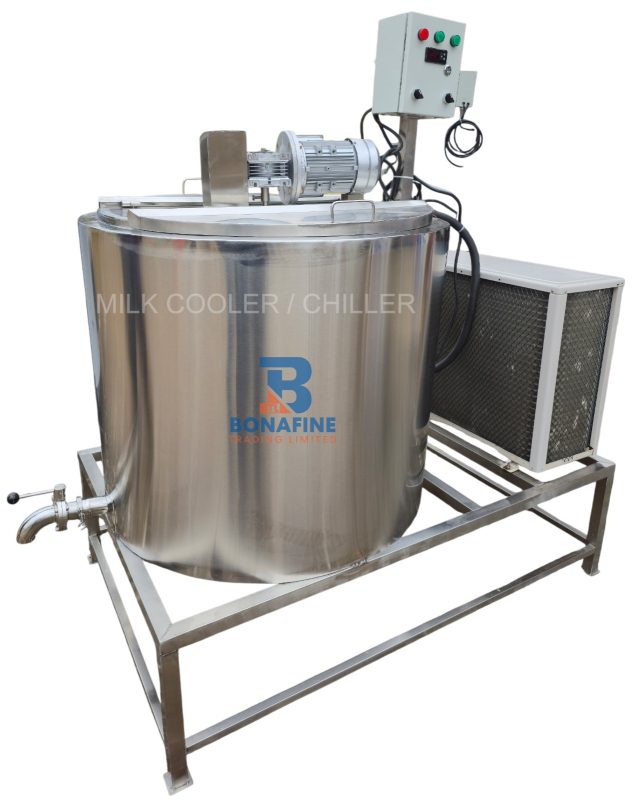

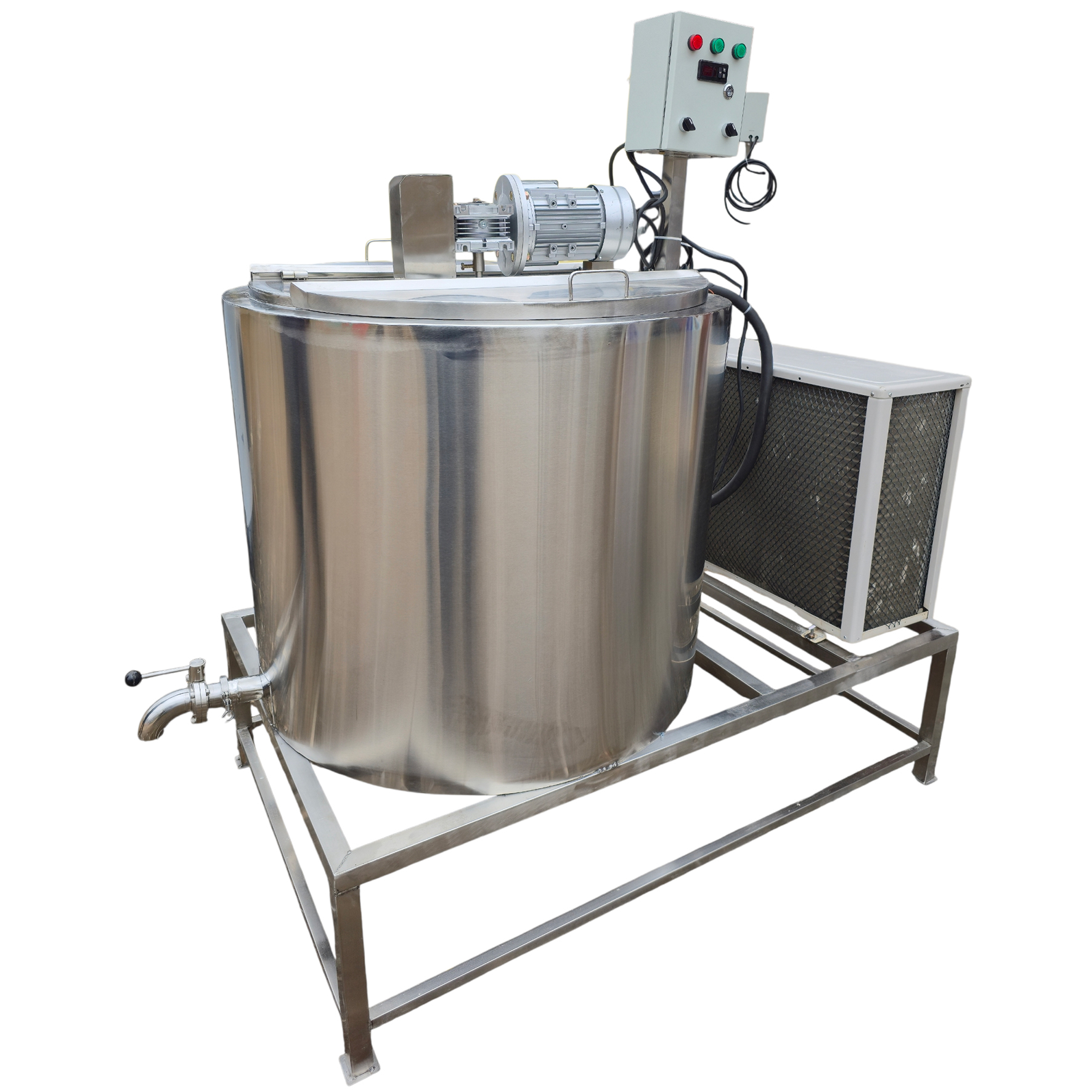
In Kenya’s warm climate, raw milk is highly perishable and can quickly spoil when left at room temperature, resulting in significant financial losses for farmers and processors. As a result, the milk cooler has emerged as a crucial asset in the dairy industry in Kenya, playing a vital role in preserving milk quality and safeguarding the income of various stakeholders, including smallholder farms, milk collection centers, cooperatives, processing plants, hotels, and institutions.
Bonafine Trading Limited is dedicated to producing, supplying, and installing high-quality milk cooling tanks designed to meet the specific needs of clients in Kenya. This guide covers important details about milk cooling systems in Kenya, including their operation, importance, factors to consider before buying, and advice on how to get the most out of your investment.
What is the function of a milk cooler/chiller?
A milk cooler, also referred to as a milk cooling tank or bulk milk cooler, is a refrigerated apparatus used to rapidly reduce the temperature of freshly gathered milk, typically to around 4°C, and keep it at this temperature until it is gathered or processed. Quick cooling helps prevent the growth of bacteria, protects the quality of milk, and naturally extends its shelf life, eliminating the need for synthetic preservatives. In essence, a milk cooler offers a cooling period, acting as the most effective way to protect the quality of milk from milking to processing.
Why milk cooling is important in Kenya?
In Kenya, the cooling of milk holds great importance due to the country’s thriving dairy industry in East Africa, where a significant amount of milk is produced daily by a range of producers, including small-scale farmers and large commercial enterprises. However, a considerable portion of this milk goes to waste or loses quality because of poor handling and delayed cooling, especially in regions lacking reliable refrigeration facilities.
Various factors highlight the crucial role of milk cooling in Kenya:
- The high temperatures in most milk-producing areas accelerate bacterial growth in raw milk.
- Additionally, the long distances between farms, milk collection points, and processing facilities lead to extended transport times for the milk.
- Milk collection sites and cooperatives often gather milk from multiple farmers, emphasizing the need for prompt cooling at a central location to ensure consistent quality for the combined batch.
- In Kenya, the dairy industry increasingly rewards farmers and cooperatives for delivering milk with lower bacterial levels, underlining the financial advantages of proper cooling.
- Institutions, hotels, and schools that manage their milk procurement need a secure method to store milk between deliveries.
- The purchase of a milk cooling system is no longer reserved for large processors; it has become a standard requirement for all committed participants in the dairy supply chain, whether it is a single large farm or a large milk collection facility.
The way a modern milk cooling machine operates is through a carefully thought-out process:
- Milk Reception: Fresh milk is brought into the stainless steel tank, often through a screened inlet to remove impurities, either by pouring or pumping.
- Cooling Process: The machine’s cooling system moves cold refrigerant around the tank’s cooling jacket or plates, drawing heat away from the milk.
- Stirring: Inside the machine, an agitator, driven by a geared motor, stirs the milk continuously and gently, ensuring even cooling throughout the tank. This consistency helps prevent the development of hot spots that might encourage bacterial growth.
- Temperature Regulation: Once the milk reaches the desired temperature (usually around 4°C), the system maintains this temperature until the milk is ready for collection or further processing.
- Milk Extraction: The milk is taken out through an outlet valve, often for transportation in insulated tankers or immediate processing.
What distinguishes a specialized milk chilling unit from a basic freezer or temporary cold storage space is its distinct ability to rapidly cool and consistently stir the milk. This is why conventional refrigeration equipment is not suitable as a replacement for specialized dairy cooling systems.
Milk cooling offers several benefits in the dairy industry.
- It helps to slow down bacterial growth, which helps to maintain the quality of milk over a longer period.
- By following proper procedures, raw milk can be preserved for about four days, giving farmers and cooperatives more flexibility in their pickup and delivery schedules. This reduces losses from spoilage, protecting farmers’ income and allows for better assessment of milk quality, potentially leading to higher prices from buyers.
- It also helps in complying with food safety regulations for places such as hotels, institutions, and processing facilities.
- Additionally, it reduces the need for frequent deliveries on the same day, which in turn lowers transportation costs.
- Ultimately, it helps to uphold the reputation of cooperatives and collection points that cater to a variety of downstream customers.
Acquiring appropriate cooling equipment can be a lucrative investment for dairy cooperatives and milk collection centers. The advantages, such as reduced rejection rates and improved pricing strategies, usually become apparent within a short period of a few months.
Choosing the right material
Bonafine Trading Limited prefers to use Stainless Steel 304 when making milk coolers, as it is a food-grade material well-known and accepted in the dairy sector worldwide. The choice is made due to its significant influence on the safety of the milk and the longevity of the machinery, and not just for its appearance.
Stainless Steel 304 is the preferred option for various reasons.
- It remains inert when in contact with milk, ensuring that no alterations in flavor or safety occur due to any chemical interactions.
- It offers excellent resistance to corrosion, making it well-suited for withstanding the frequent cleaning, sanitizing, and exposure to milk acids that dairy equipment encounters daily.
- Its smooth, non-porous surface facilitates easy maintenance of cleanliness and hygiene, preventing the accumulation of bacteria in cracks or indentations as lower-quality materials might.
- It is durable and ensures an extended lifespan even under continuous use in commercial environments.
- It complies with the food quality safety standards established by dairy professionals and processors.
Choosing a stainless steel milk cooler over cheaper alternatives is a crucial decision for buyers, as the tank material is essential for maintaining milk safety and can influence long-term ownership costs significantly.
The Importance of the Geared Motor and Agitator in Bonafine Milk Coolers
Every Bonafine milk cooler comes equipped with a robust geared motor and agitator setup. While many buyers tend to focus solely on tank size, the significance of this particular component should not be underestimated. Here’s why it matters for milk quality:
1. Even Cooling: Neglecting agitation can lead to uneven cooling within the tank, causing different temperature zones that encourage bacterial growth.
2. Uniform Fat Distribution: By ensuring gentle and continuous mixing, the agitator prevents cream separation and promotes a consistent milk product.
3. Faster Cooling: Proper agitation facilitates more efficient cooling of the entire milk batch, thus optimizing energy consumption.
4. Delicate Handling: The geared motor operates at a speed that safeguards milk fat globules from harm, contrasting with high-speed agitation methods.
A milk cooler lacking effective agitation is essentially just an insulated container, incapable of delivering the uniform and reliable cooling associated with a genuine dairy cooling apparatus.
Maintaining Milk at 4°C and Its Impact on Quality
Around 4 degrees Celsius is the standard temperature for storing raw milk according to international guidelines.
- The growth of bacteria is noticeably inhibited, leading to a decrease in the enzymatic breakdown of milk quality.
- When stored correctly, fresh milk can generally remain usable for around four days.
- Its nutritional content, flavor, and suitability for making pasteurized milk, yogurt, and cheese are maintained.
One of the primary reasons for milk being rejected at collection centers and processing plants is the inability to achieve or sustain the required temperature. This can result from various factors such as insufficient cooling ability, inadequate insulation, or insufficient mixing.
Single-phase and Three phase milk coolers
Bonafine offers milk coolers in either Single Phase or Three Phase electrical options, which are determined by the unit’s capacity and the power supply accessible to the purchaser.
| Configuration | Typical Use Case | Considerations |
| Single Phase | Smaller capacities, individual farms, small collection points | Compatible with standard domestic/small commercial power supply; simpler installation |
| Three Phase | Larger capacities, milk collection centres, cooperatives, processing plants | Requires three-phase power connection; more efficient for larger refrigeration loads |
Prior to placing your order, we suggest verifying the power supply situation at your location to ensure we can provide suitable recommendations and prevent the need for expensive adjustments in the future.
Comparison between Vertical and Horizontal.
Cylindrical milk coolers with a vertical design offer a space-saving solution, making them perfect for locations with restricted floor space. They are commonly chosen for their suitability for modest to moderate capacities and their convenience in installation within cramped areas like compact collection centers.
Milk coolers in a horizontal cylindrical shape have a lower center of gravity, making them suitable for larger installations. They are often the top choice for high-volume cooperatives and processing plants due to their capacity. Additionally, they provide more convenient access for cleaning and inspection, especially in larger sizes.
Selecting the most suitable option relies on the space you have, the capacity needed, and how the tank will be connected with other dairy machinery like receiving tanks and pasteurizers.
Various Uses of Milk Cooling Systems Throughout the Dairy Industry
Milk cooling systems provided by Bonafine Trading Limited are utilized by a diverse array of sectors:
- Dairy farms use them to keep milk fresh between milking sessions and pickups.
- Milk collection points employ the systems to aggregate and cool milk from various farmers before transporting it in bulk.
- Dairy cooperatives rely on the equipment to uphold consistent quality standards for large quantities of pooled milk.
- Milk processing facilities utilize the systems to store raw milk before pasteurization or additional processing.
- In the hospitality sector, such systems are crucial for ensuring a safe and fresh milk supply for culinary purposes.
- Educational institutions, such as schools, benefit from these systems to support milk storage for feeding programs.
- Research facilities utilize these systems to maintain precise storage conditions for dairy-related experiments and product enhancement.
Milk Cooler Capacities and Prices in Kenya
In Kenya, Bonafine Trading Limited offers a variety of milk cooler sizes suitable for farms, collection centers, cooperatives, and processors of all scales. The prices listed below are estimations and are subject to change based on specific requirements, electrical setup, tank style, and market dynamics. For a detailed and tailored quotation, please reach out to us directly.
– 100 Litres: KES 250,000
– 200 Litres: KES 290,000
– 300 Litres: KES 390,000
– 400 Litres: KES 450,000
– 500 Litres: KES 550,000
– 1,000 Litres: KES 800,000
– 2,000 Litres: KES 1,250,000
– 3,000 Litres: KES 1,800,000
– 4,000 Litres: KES 2,100,000
– 5,000 Litres: KES 2,800,000
– 10,000 Litres: KES 4,500,000
Factors to Consider When Choosing a Milk Cooler
When considering the purchase of a milk chilling apparatus, take into account the subsequent factors:
- Amount of milk produced daily – opt for a size that can handle your highest daily output, allowing room for potential expansion.
- Power source – establish whether your location can provide single-phase or three-phase electricity.
- Space available and tank positioning – ensure that the tank’s layout aligns with your establishment’s setup, be it vertical or horizontal.
- Collection frequency – for extended intervals between pickups, prioritize units with reliable temperature maintenance.
- Cleaning convenience – seek models with sleek stainless steel interiors and easy-to-reach cleaning spots.
- Customer service – verify that the vendor offers setup, upkeep, and replacement part assistance.
- Financial considerations – include installation and electrical services costs in addition to the equipment’s price.
Requirements for Installation
Ensuring the milk cooler’s optimal performance and durability hinges on its proper installation.
Essential prerequisites usually encompass:
- A stable, flat surface capable of supporting the tank’s weight
- Satisfactory airflow surrounding the cooling unit to release heat
- Appropriate electrical connection corresponding to the appliance’s single-phase or three-phase needs
- Availability of clean water source and drainage for hygienic purposes
- Adequate space for maintenance activities and safe access for cleaning and inspections
Bonafine Trading Limited offers installation assistance to guarantee the correct setup of milk coolers right from the outset.
Suggestions for Cleaning and Maintenance
Ensuring proper hygiene and upkeep is crucial for preserving milk quality and equipment longevity:
- After each milk collection, rinse and clean the inside of the tank utilizing authorized dairy cleaning agents
- Sanitize consistently based on a predetermined cleaning timetable, rather than solely in response to milk quality concerns
- Periodically examine gaskets, valves, and seals for signs of deterioration
- Monitor the agitator and geared motor for any abnormal sounds or decline in functionalityArrange for regular servicing of the refrigeration system by a certified technician
- Maintain a detailed maintenance record to monitor maintenance activities and prepare for component renewals
Mistakes often occur during milk storage despite having appropriate equipment, which can compromise the quality of milk.
These mistakes include not promptly cooling milk after milking, overfilling the tank beyond capacity, neglecting routine cleaning and sanitizing, using inadequate refrigeration equipment not intended for dairy purposes, overlooking initial indications of mechanical problems with the agitator or refrigeration unit, and failing to consistently check the temperature.
Benefits of a milk cooler
The benefits of investing in a milk cooler are substantial for dairy farmers and cooperatives. Installing a milk cooler represents a significant capital outlay, but the advantages are evident:
– Minimized spoilage leading to direct financial gains
– Access to higher pricing brackets from processors offering bonuses for decreased bacterial levels
– Decreased instances of rejected milk batches at collection sites
– Reduced transportation frequency due to extended safe storage periods
– Enhanced trust from buyers, especially beneficial for cooperatives serving various processors
For numerous farmers and cooperatives, the milk cooling equipment proves its worth within a short period, typically one to two production cycles, by cutting losses and enhancing milk pricing.
Frequently Asked Questions (FAQ)
What is the purpose of a milk chiller?
A milk chiller is designed to quickly lower and sustain the temperature of fresh milk, usually to approximately 4°C, to inhibit bacterial growth and maintain milk quality from milking to collection or processing.
How long is the freshness of milk preserved in a milk chiller?
With proper operation, a properly serviced milk chiller can keep fresh milk viable for up to four days.
What is the cost of a milk cooling container in Kenya?
The prices fluctuate based on size, ranging from about KES 250,000 for a 100-liter model to roughly KES 4,500,000 for an industrial version holding 10,000 liters. The exact price is determined by the specifications and setup.
Which material is recommended for a milk chiller?
Stainless Steel 304, which is food-grade, is the favored choice in the industry due to its non-reactive, corrosion-resistant, and easy-to-maintain characteristics.
Is a three-phase electrical supply necessary for a milk chiller?
The requirement for a three-phase power supply hinges on the capacity. Smaller units can often operate on a single-phase supply, whereas larger commercial and cooperative-scale units typically need three-phase power for optimal performance.
What sets apart a vertical and horizontal milk chiller?
Vertical chillers have a smaller footprint and are suitable for limited-space locations, whereas horizontal chillers are often preferred for larger capacities and ease of access on a larger scale.
Can a milk chiller be utilized by a small dairy farm?
Certainly. Bonafine Trading Limited offers smaller units, starting from 100 liters, suitable for individual farms and modest collection points.
Why Choose Bonafine Trading Limited
Bonafine Trading Limited is the preferred choice for those seeking a comprehensive selection of dairy processing machinery in Kenya. Our milk cooling systems are expertly crafted to suit the unique operational requirements of the region, boasting a construction of top-quality Stainless Steel 304, robust geared motor agitation, and consistent functionality in various power configurations and orientations, be it vertical or horizontal.Aside from providing top-notch equipment, we offer personalized assistance in installation, post-purchase support, and customized recommendations based on individual production capacities, power needs, and site layout. Whether you are an individual farmer, a milk collection point, a cooperative, or a large-scale processing facility, we cater to your specific requirements.
Receive Professional Guidance on Milk Chilling Options
Selecting the appropriate milk chilling equipment is a crucial choice with long-term implications for milk quality, farmer earnings, and the standing of a business. Whether you require a compact solution for a single farm or a high-volume setup for a cooperative or production facility, Bonafine Trading Limited is prepared to assist you in discovering the perfect match.
For professional guidance, tailored milk cooling options, setup, and post-purchase assistance, reach out to us without delay at Bonafine Trading Limited.
Find us situated on 📍Thika Superhighway, Ruiru Toll Station Shopping Centre, Exit 13, opposite Fahrenheit Building, Kenya.
Feel free to get in touch via📞 phone or WhatsApp at 0794 966 527
visit our website at🌐 www.bonafinetrading.co.ke
or drop us an email at📧 info@bonafinetrading.co.ke